Nix
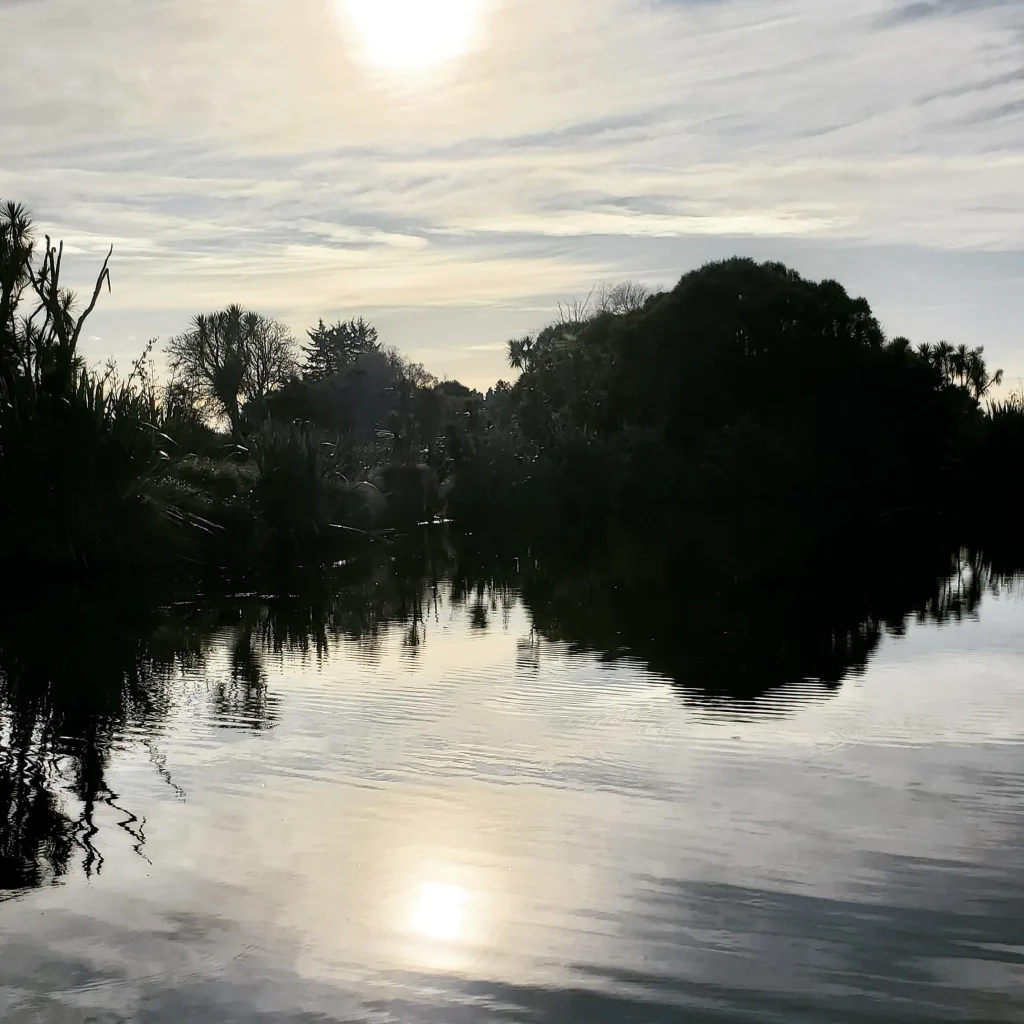
Looking for nixies in the water… Photo credit M Gunn Today’s focus is the Nix, or Nixie: A Scandinvian, Germanic and English water spirit.Generally, Nix is the masculine version and Nixie is the feminine one. Some famous nixie were the Lorelei, and the Rhinemaidens in Wagner’s opera.s Both are associated with quiet rivers and ponds, and with music. Nix are attributed with the power of creating beautiful music, and sometimes were said to use their music to lure in the unwary (much like sirens). Unlike nymphs, nix had the potential for violence or malevolence. Traditionally, the Nix could teach humans wonderful musical skills – for a fee. The Fossegrim was a Norwegian nix who played the violin most beautifully (I used this legend as inspiration for one of the water deities in Storm Surge).
Nixies were considered to be shapeshifters, with their shifted forms always retaining some indication of their watery origins. When they shifted into horses, they would be white or dappled, unlike the more sinister kelpies, which were black. Nixies often fell in love with humans (and vice versa), with varying outcomes.Sometimes they were said to drown their loved ones at the end of a relationship!Other times, they mourned the loss of a loved one, though they were bound to return to their river or stream.They could be villains, teachers or lovers – as versatile as you might expect from a water deity.
There are a number of different names for the Nix, depending on which the culture or country in which they’re described. Some examples are Nekkar, Neck (the singular of Nix), Näcken or nøkke. There are several related-but-different water spirits in different cultures. Since the Weather Gods is set in the UK, I’ve used local ones such as grindylows and Jenny green-teeth is some of my Weather Gods stories.
Medusa
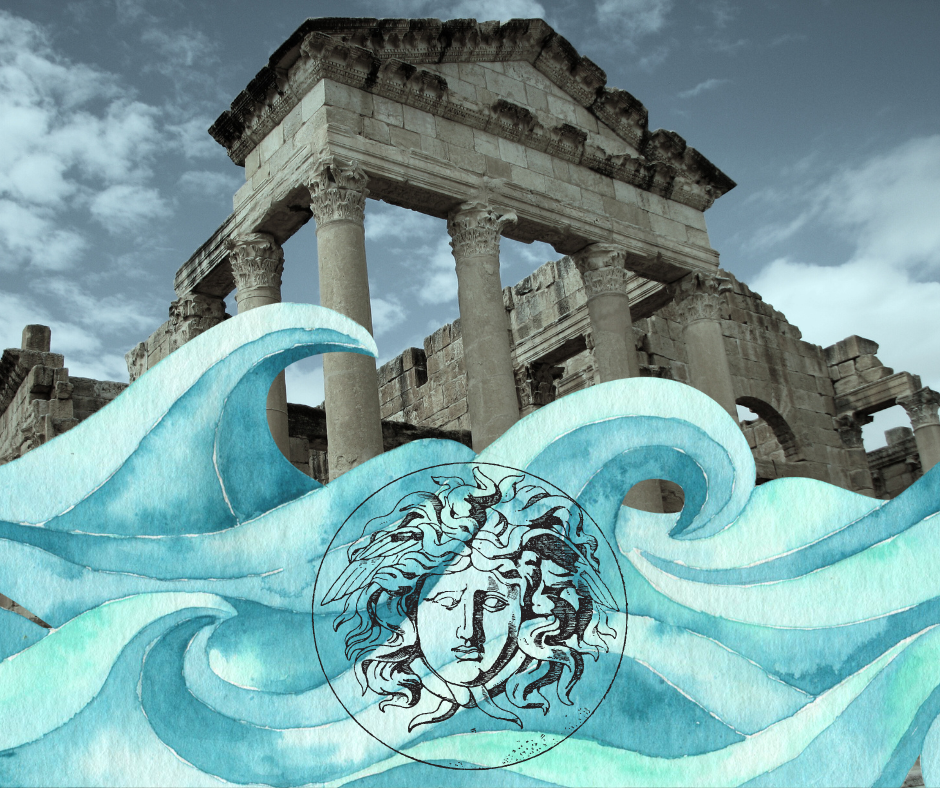
This week I had fun writing a Medusa into Thunder Snow as a bit-part (I’m rewriting Thunder Snow, hopefully it will be more fun to read as a result). But back to Medusa! Many people will have heard of the snake-headed Medusa, who is probably the most well-known of the Gorgons. The Gorgons were often described as the children of the sea gods Phorcys and Ceto. They’re commonly shown as winged women, and all three sisters, not only Medusa, have snakes for hair. While the Gorgons are described as monsters, Medusa is also shown in some art to be beautiful. However, the Greek myth of Medusa is something of a tragedy. There are various retellings, but they tend to agree that Poseidon (god of the sea had some form of intimate relations with Medusa in Minerva’s/Athena’s temple [note that Minerva and Athena are the Roman and Greek names for the same goddess]. In punishment, Minerva/Athena made Medusa so hideous that men were turned to stone when she looked at them. Alternative stories say her hair was turned to snakes. As if that weren’t bad enough, Perseus (usually referred to as ‘the hero Perseus’) then beheaded her after sneaking in with the aid of a mirror, and used her head to turn others to stone. All in all, a rather grim legend, which is very hard on Medusa. Suffice to say all that nastiness doesn’t make it anywhere near my own story!
The Morrigan
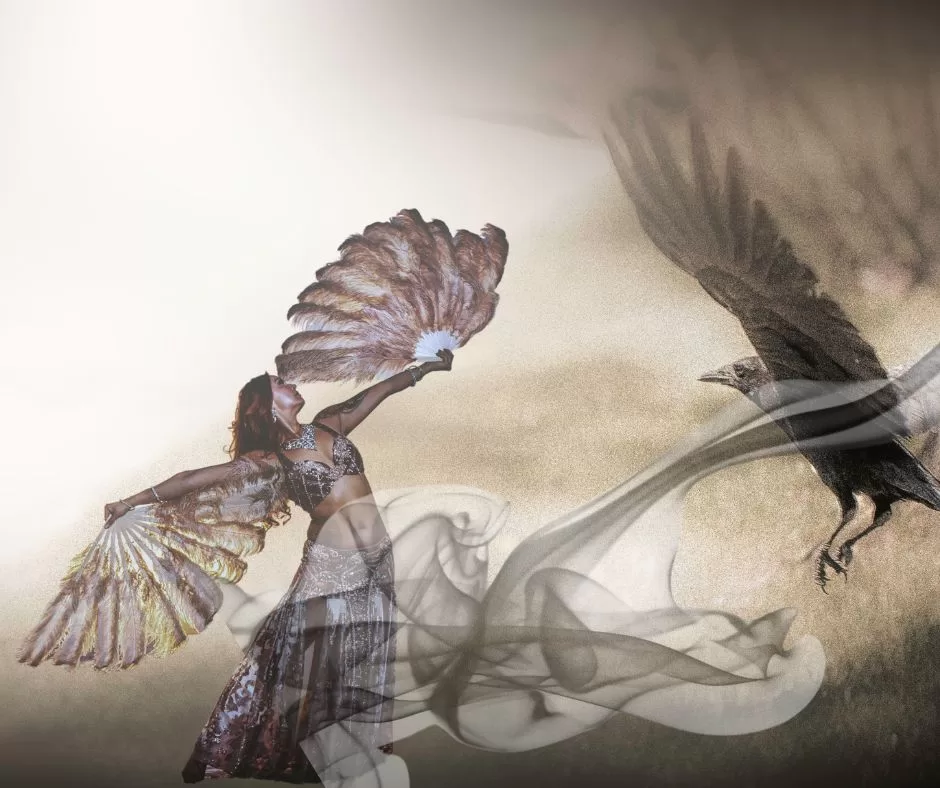
This Monday, let’s look at the Morrigan, since I’m currently writing something in the Weather Gods world which mentions this Celtic warrior-queen-goddess. As if that weren’t bad enough, Perseus (usually referred to as ‘the hero Perseus’) then beheaded her after sneaking in with the aid of a mirror, and used her head to turn others to stone. All in all, a rather grim legend, which is very hard on Medusa. Suffice to say all that nastiness doesn’t make it anywhere near my own story! She is also depicted as an old woman who washes clothing in a river, which may turn red with blood as an omen (presumably from the clothes she’s washing). When living in the human world, the Morrigan’s home is thought to be a cave in Roscommon, Ireland, known as Hell’s gate.
Matariki
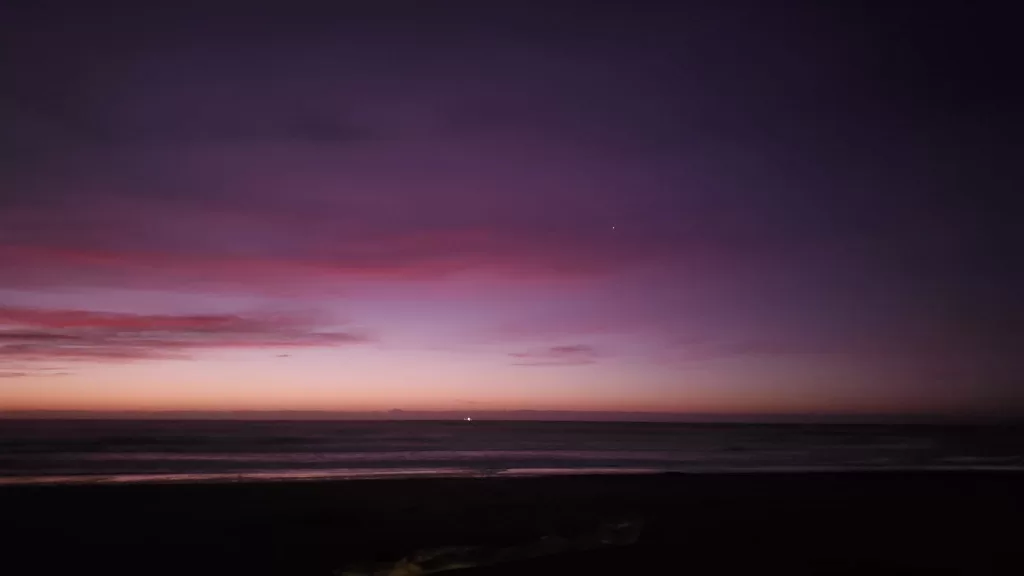
Matariki dawn at the beach (Photo M Gunn) Last week I promised to include something about Matariki, which is a public holiday in New Zealand based around the rising of the star cluster Matariki (or in some parts of the country, Puanga/Rigel). It’s interesting that different cultures are so fascinated by this group of stars, also known as the Pleiades. Other names exist too, e.g. Subaru in Japan – do you know a local name for them? In Māori mythology each of the stars has a name and associated attributes. For example, Waitī and Waitā are associated with freshwater and ocean water. Ururangi stands for the wind. There’s a complete list of the stars of Matariki and their meanings here: https://www.aut.ac.nz/…/the-9-whetu-stars-of-matariki…. (thanks for the primer, AUT). Matariki is a time for reflection, remembering those who have passed, and planning for the future. Similarly, Greek mythology names each of the Pleiades as the seven sisters, who were said to be fleeing from Orion. The star cluster was also said be used to dictate when it was best to avoid sailing the seas.
Rain gods
It’s a dull and rainy Monday in Ōtautahi Christchurch, so I decided to look up rain gods. There are a lot! Rain is pretty important to us humans, and that means that pretty much every culture has one or more rain gods. Broadly speaking, the drier the climate, the more rain gods there are (although that’s a very unscientific generalisation with not much research behind it!). Because the Weather Gods novels focus more on Western gods, I’ll pick up on a couple of those who are very well-known. First up is Zeus, father of the Greek gods, and all-round controller of weather. When I looked for a story about Zeus and rain, what I found was predictably bombastic. According Theoi.com, as the god of the skies Zeus controlled the lightning and thunder, which he (often) used to make his will known. However, he also controlled the rain, which he removed in order to convince people to pray to the gods again! Because of the resulting shortage of food, people prayed once more. The Norse god of rain was Freyr, brother to Freya/Freyja, he seems generally much more amicable as gods go. Freyr is also the god of fertility, peace and good harvests (presumably by providing just the right amount of rain). However, some accounts suggest instead that Thor, along with his control of thunder & lightning, also controls rain.
These different accounts of the aspects of the gods might be due to their legends deriving from different Scandinavian countries (e.g. Iceland vs. Norway or Sweden). By way of contrast to these male deities, the ancient Egyptian rain deity is Tefnut. This lioness-headed goddess who was said to be the deity of moisture, dew and rain, perhaps reflecting the relative lack of rain in Egypt, compared to Greece or Scandinavia. There is in fact a Greek goddess of dew, Ersa, who is the daughter of Zeus and the Titan moon goddess, Selene. However, very little is recorded about her. What local stories of rain gods do you know of?
Sprites: myth or meteorology?
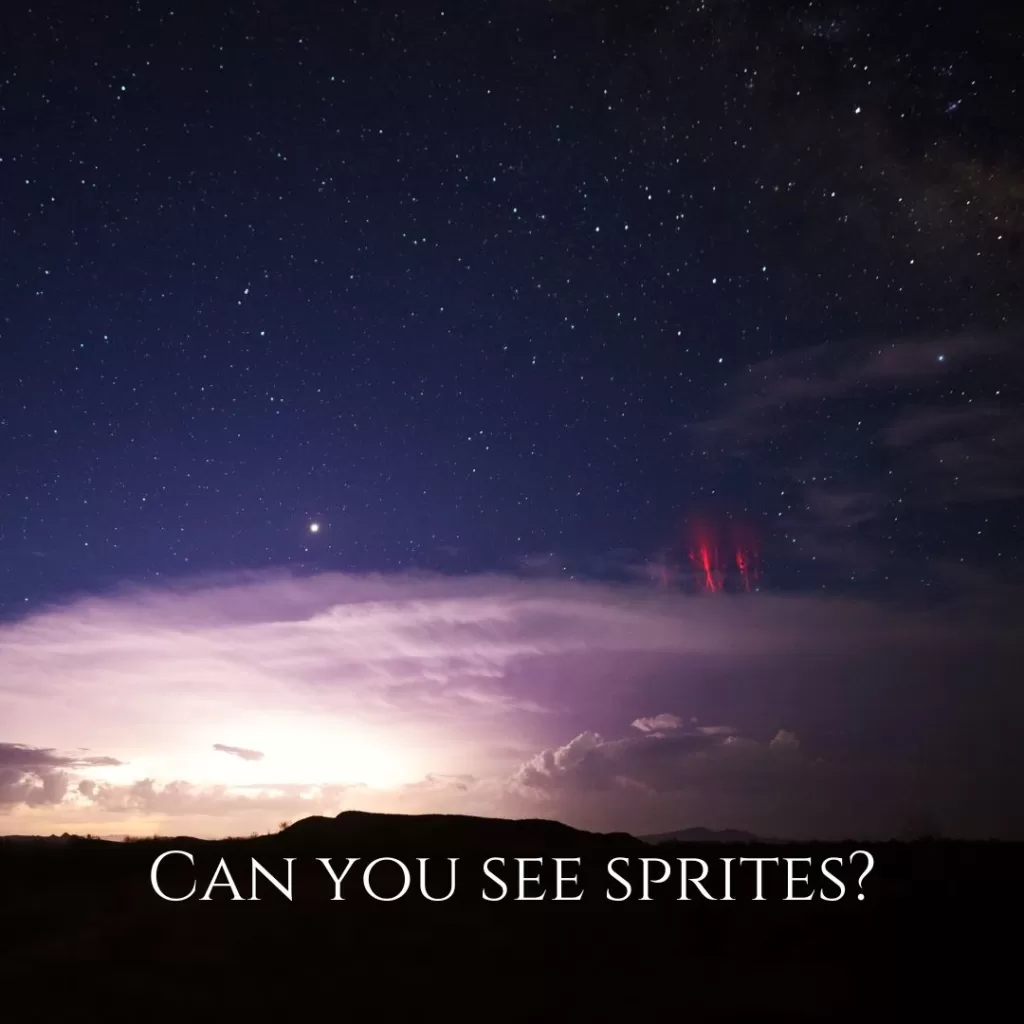
The city I spent most of the last 15 years in has had a lot of power cuts in the last couple of days thanks to thunder storms. The most obvious thunder god in European mythology is Thor, but I thought I’d look into something less well-known: a combination of science and mythology, in fact. There’s a rare lightning phenomenon that occurs above thunderstorms, called a sprite (or red sprite). It looks like red lightning! Meanwhile, down on earth, there’s a long history of sprites being characterised as mischievous supernatural beings. From the Latin for spirit, there is also the Celtic Spriggan. Sprites are usually considered to be small, and don’t usually help humans. In some mythologies they’re classed as air elementals. I can’t help but think that the meteorologists who names sprites had a good sense of mythology! I used an amalgamation of the mythological and meteorological sprites for a scene in Storm Surge, bringing the sprites down from the upper atmosphere because it’s hard to interact with something that’s above the clouds when there are no plane flights in the book. But the most fun was actually researching the origin of the phenomenon.
Wind gods, there’s a few…
Pretty much every polytheistic religion has gods or goddesses of the wind, often more than one. The Anemoi were lesser wind gods of the Greeks, ‘sub-gods’ of the main one, Aeolus. The Anemoi correspond more or less to the directions of the wind, East, West, North and South represented by the four major anemoi. The ‘angles’, northeast, northwet, southeast and southwest, are represented by four lesser ones. You might have heard of some of the major ones, like Zephyrus (aka Zephyr, for the gentle west wind). But have you heard of Kaikais, Apeliotes, Skiron or Lips? They’re the lesser anemoi. I used Apeliotus as the basis for one of the characters in Storm Surge. Have you read it? Other wind gods appear in Heat Wave. All of them would be out of place in New Zealand though, where the west wind is often strongest! The Māori god of the weather is Tāwhirimātea.